In short
- A bachata social is an evening of free partner dancing: no choreography, different partners, one song at a time.
- Most people are ready for their first social after four to eight weeks of weekly classes.
- Anyone can ask anyone to dance, and a polite "no, thank you" needs no explanation.
- Never teach on the social floor: adapt to your partner's level and keep an eye on the space around you.
- Bring clean shoes with a smooth sole, water, a spare T-shirt and deodorant.
Sooner or later someone in your class will ask: "Are you coming dancing on Saturday?" And with that question comes a little nervousness. What if I do not know what to do? Who do I ask? What if nobody asks me? We have taught bachata for more than fifteen years, so we can tell you this: the first social is a small leap into the unknown for almost everyone, and almost everyone comes home smiling. Here is everything you need to know before you go.
What a bachata social actually is
Bachata party, social, Latin night: the names change, the idea does not. It is an evening of free partner dancing. A DJ plays songs, people ask each other to dance and every couple dances in its own way. Nobody performs a routine. The leader puts together the figures they know, following the music and the partner, and the follower reads the lead and adds their own styling.
That is what makes socials so valuable. In class you dance the figures you have just learnt, with people who know them too. At a social you dance with someone you have never met, to a song you do not know. Only there do you find out whether you can really lead and follow, rather than repeat a sequence.
How the evening runs
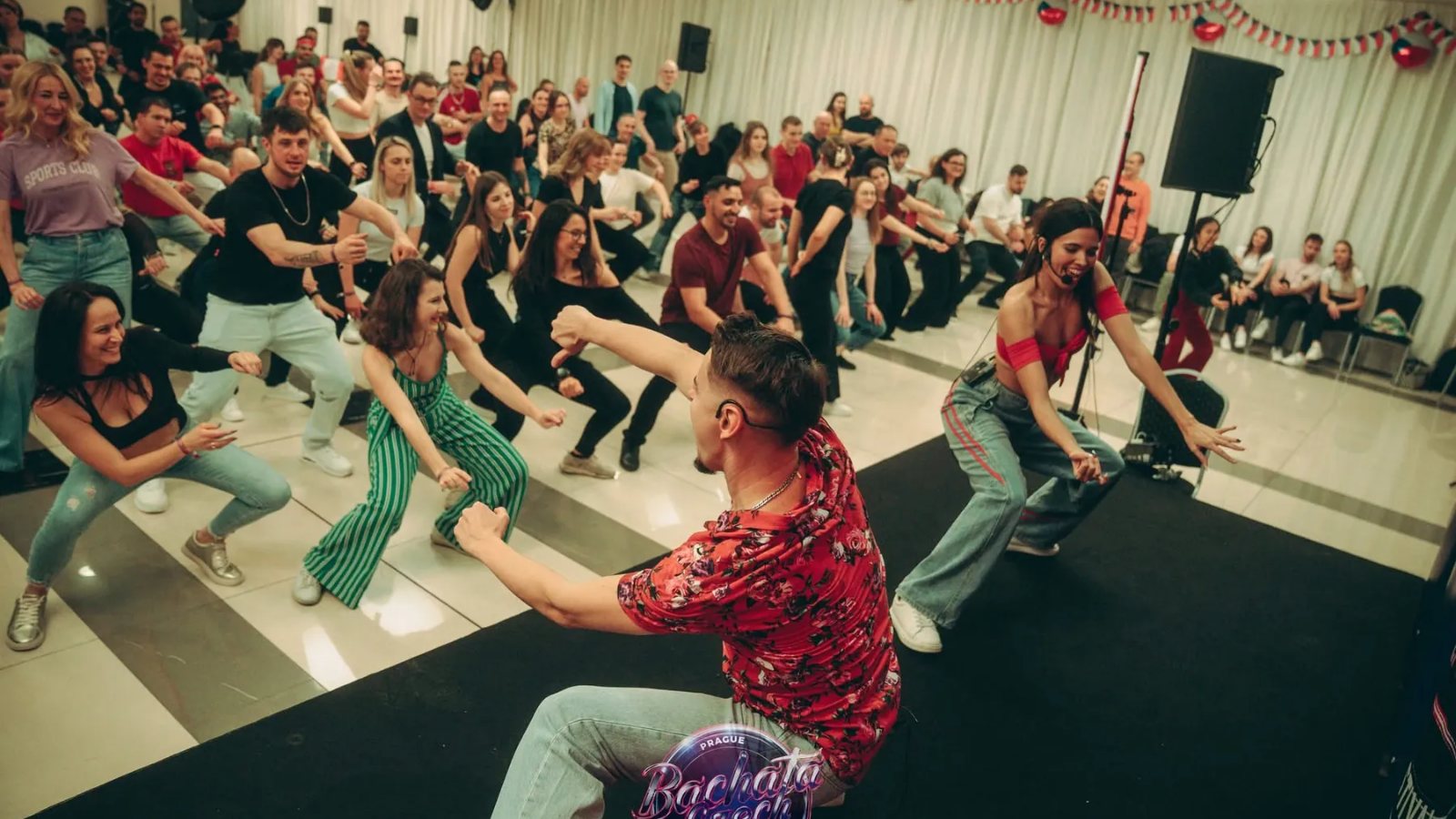
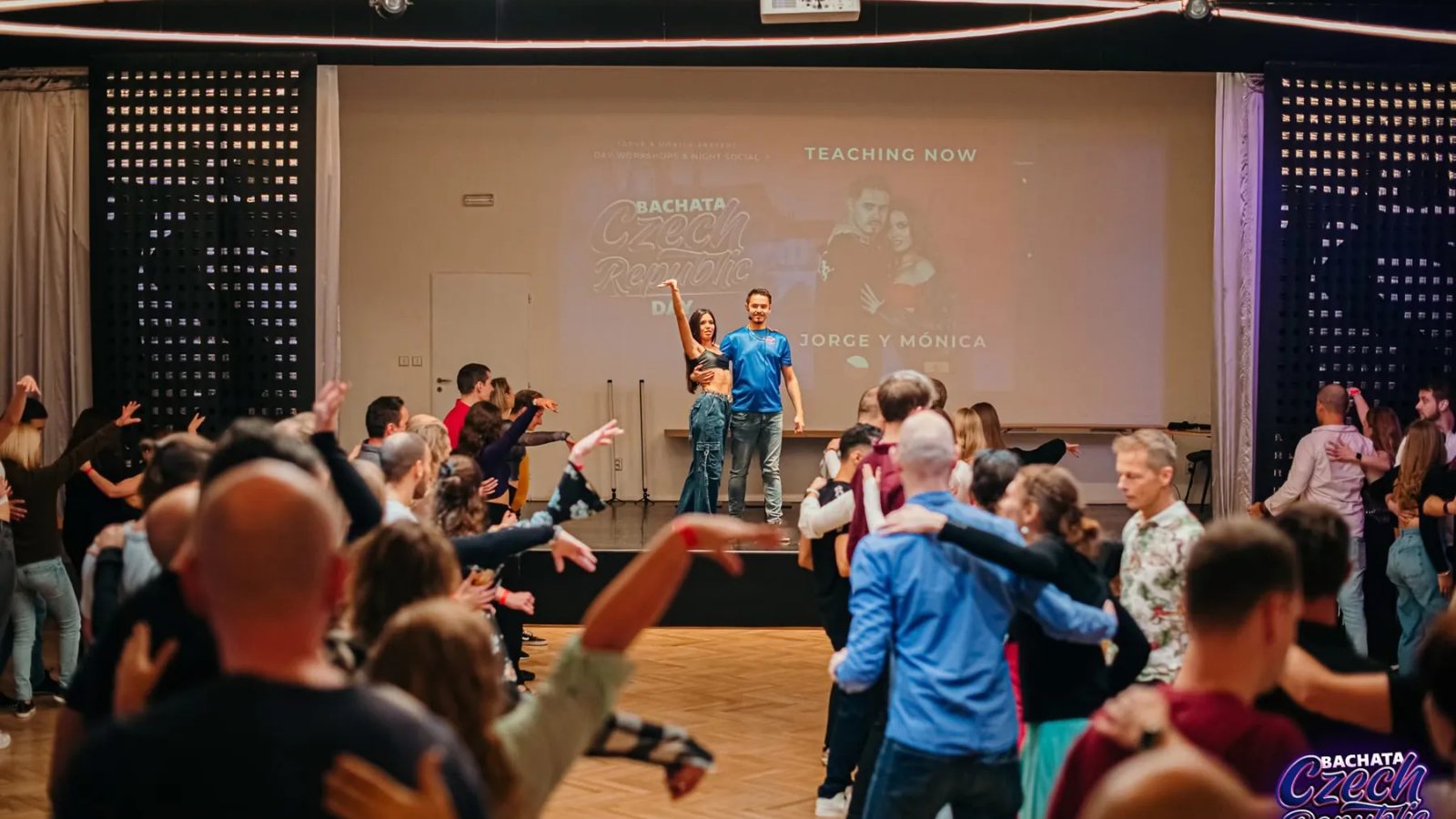
Many parties begin with workshops, where you learn a short pattern or a piece of technique, and only then open the floor. That is how our own Bachata Czech Republic Night works: workshops first, then social dancing late into the night. Early in the evening the floor is often half empty and the music calmer; most people arrive later.
Your first night at a social
- ArriveChange your shoes, drop your bag, drink some water
- WorkshopIf there is one, it warms you up and you meet people
- WatchListen to a few songs and see how people dance
- First danceAsk someone you know from class
- New facesThen try people you have never met
You do not have to dance every song. A break at the bar is as much a part of the night as the floor.
When are you ready for your first social?
Honestly: sooner than you think. With one class a week, many people dance their first full song at a party after four to eight weeks. By then you have the basic step to the side, forward and back, a few turns and a change of direction. That is enough for a whole song, as long as you stay on the beat and are pleasant to dance with. The full timeline is in our article on how long it takes to learn bachata.
You can come to a party with no classes at all; events are open to everyone. Without the basic step, though, you will mostly be watching. You will enjoy it far more with a few lessons behind you, ideally in a beginner course where partners rotate, so you are used to dancing with different people before you step onto a social floor. If you have not started yet, read our guide to your first bachata class in Prague.
How to ask someone to dance
At a bachata social anyone can ask anyone, whatever their role, age or level. You do not have to wait to be asked. Keep it simple:
- Come closer and make eye contact, so it is clear who you are asking.
- Ask in words: "Would you like to dance?" or "Zatančíš si?" At Prague socials you will hear both English and Czech.
- Offer your hand and wait for the answer. Never pull anyone onto the floor.
- Say thank you afterwards and walk your partner back to the edge of the floor.
Try not to ask people who are resting, drinking or in the middle of a conversation. Wait for the end of the song or the chat.
Saying no, and hearing no
Declining a dance is perfectly fine. "No, thank you" or "I am taking a break" is enough, and you owe nobody a reason. If you would like to dance with that person later, say so: "I'm taking a break, but I'd love to dance later." You can still change your mind later.
Accepting a no matters just as much. It does not mean you did anything wrong. People get tired, their feet hurt, they are waiting for a friend. Smile, say thanks and move on. Do not insist, and do not ask the same person again straight away for the next song.
One song or two?
At a bachata social you usually dance one song with the same partner. After it, it is natural to say thank you and part. If you both want to continue, ask: "One more?" How many songs you dance together is up to the two of you, but changing partners is one of the best parts of a social, just like in class.
Social dance etiquette at a glance
On the social floor
Do
- Ask in words and wait for the answer
- Adapt your figures to your partner's level
- Watch the space and the couples around you
- Say thank you after every dance
- Arrive showered, with deodorant and a mint
- Bring a spare T-shirt
Don't
- Teach or correct your partner on the floor
- Push for a yes, or argue with a no
- Try figures you have not practised
- Dance all night in a soaked shirt
- Stand in the middle of the floor with a drink
- Wear heavy perfume
No teaching on the social floor
This is the rule beginners break most often, and always with good intentions. When something does not work, do not tell your partner what to do differently. Do not correct their step, their frame or their counting. People come to a social to dance, not to receive a lesson they did not ask for. If your partner explicitly asks for advice, that is different. Otherwise: when a figure fails, smile and keep dancing. Make a note of it and ask your teacher in the next class.
Dance for your partner, not for the audience
A great social dance is not the one with the most figures. It is the one after which your partner feels it was easy to dance with you. Leaders, choose figures your partner can follow. If a turn does not work, do not try it three times in a row. Followers, you do not need to predict anything: wait for the lead and do not run ahead. We go deeper in our article on leading and following in bachata.
Floor craft on a busy floor
On a crowded floor take smaller steps and keep your movements within the space around you. Bachata works forward and back in a small space, which is exactly what that step is for. The leader is responsible for where the couple travels: look around before you send your partner into a turn, and save big moves for when there is room. If you bump into someone, apologise briefly, even if it was not your fault.
Consent and a safe space
Bachata is danced close, which is why one principle matters here more than anywhere: closeness is an offer, not an obligation. Anyone can ask for more distance or a looser hold at any time, or end the dance in the middle of a song. If you feel uncomfortable during a dance, you have every right to say thank you and walk away. Leaders, if you feel your partner creating more space, respect it without comment.
In our classes and at our events we want everyone to feel safe. If something happens that made you uncomfortable, write to us in confidence at safespace@jorgemonica.com. Only Jorge and Mónica read it. You can read more about our approach on the safe space page.
Dancing with strangers and different levels
At a social you will meet beginners who have danced for a month and dancers who travel to festivals abroad. That mix is good for everyone. Most experienced dancers are happy to dance with beginners, because they remember how they started. Do not be afraid to ask them; just accept that the answer might be "not now".
If you are a beginner, do not try to impress. Dance what you know, on the beat and with a smile. A clean basic step feels far better to a partner than a failed figure copied from a video. And if you are advanced, remember that the best dancer on the floor is the one everybody wants to dance with.
What to bring and wear
What to bring to a social
Nobody checks your outfit; you will see jeans and dresses side by side. What matters is that you can move freely and that nothing catches on your partner's hands. If your hair is longer than shoulder length, tie it up for turns. Our first class guide has more on shoes and clothing, and the same advice applies to socials.
The music you will hear
At a bachata party the DJ plays different kinds of bachata: traditional Dominican songs with a faster guitar, modern bachata, and slower tracks that people dance sensually. At mixed Latin parties bachata alternates with salsa and other dances. If you do not recognise a song or the tempo does not suit you, sit it out.
Knowing the music helps enormously on the floor. Play some of our bachata songs for beginners at home and learn to hear the one and the accents. Why that matters so much is explained in our article on bachata musicality.
How classes and socials fit together
Classes and socials feed each other. In class you learn something new and a teacher corrects what is not working. At a social you discover what is really in your body and what is only in your head. Then you come back to class with a precise question. Students who go to both progress much faster than those who only do one.
| Class | Social | |
|---|---|---|
| Goal | Learn a new element and technique | Dance with different people to unknown music |
| Partners | Rotate every few minutes | You choose them, usually for one or two songs |
| Corrections | The teacher corrects you | Nobody corrects anybody |
| Music | Chosen for the topic of the class | A whole evening from the DJ, all tempos and styles |
Where to dance bachata in Prague
Bachata is danced in many places across Prague and the organisers change over time. The most reliable guide is the community itself: ask your teachers and classmates where they go. Our own events are all on the bachata events in Prague page:
- Bachata Czech Republic Night: evening parties with workshops before the social. An ideal first party, because the workshop warms you up and you meet people.
- Spanish Bachata Training Camp: an intensive weekend outside Prague in a small group, with a whole weekend to put your dancing into practice.
- Bachata Czech Republic Festival: our international festival in Prague, 26 to 28 February 2027, three days of workshops and night parties with dancers from all over Europe.
At our events you step onto the floor among people you know from class. For a first social that makes all the difference: there is always someone to ask.
Start in class, continue on the floor
If you do not dance yet, the easiest start is Bachata 0: no test and no partner needed. Our Prague classes are taught mainly in English, at Ruelto Studio in Smíchov, near Anděl, and at Taneční centrum Na Bělidle. The spring term starts in February 2027. Already dancing? Come to a free level test and we will place you in the group that fits. Everything is on bachata classes in Prague, and if you would like a few lessons one to one before your first social, see private bachata lessons.
Questions people ask
What is a bachata social?
How many classes do I need before my first bachata social?
How do I ask someone to dance?
Is it rude to say no to a dance?
How many songs do you dance with one partner?
Do I need a partner to go to a bachata party?
Where can I dance bachata in Prague?


Written by
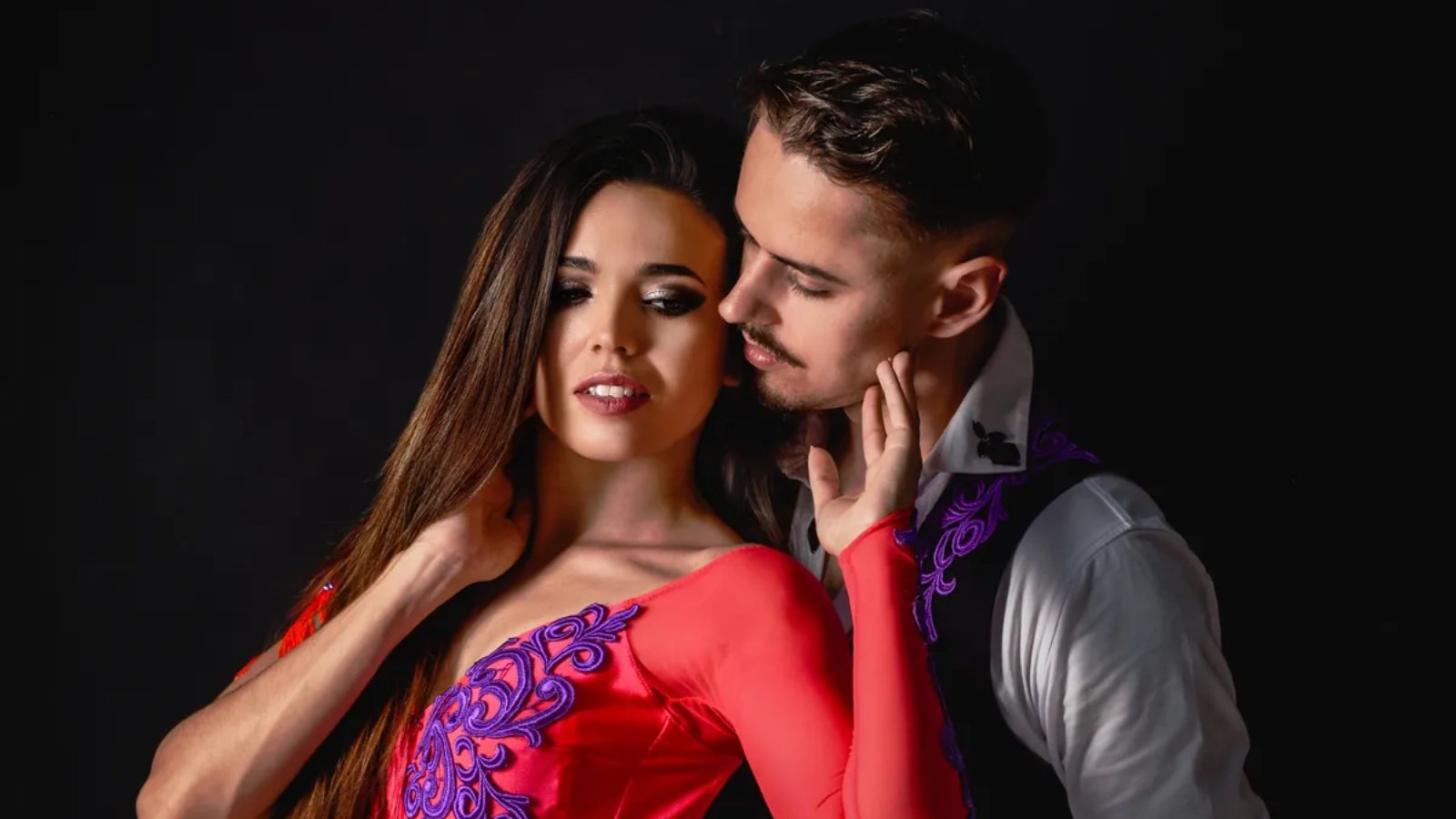
Jorge and Mónica are professional dancers who have taught bachata for more than fifteen years. As international artists they have taught from Tokyo and Singapore to Melbourne and Spain; in Prague they run Jorge y Mónica Academy and Bachata Czech Republic Festival.