In short
- A good practice song has a clear bongo, a steady tempo and an audible tap on 4 and 8.
- For this guide we group bachata music into three types: traditional Dominican, romantic modern and slower remixes that people often dance sensual to.
- Start with slow and medium songs; save fast traditional bachata for later.
- Five minutes a day with one song does more than an hour once a week.
- At a party you will hear all three types, so practise to each of them.
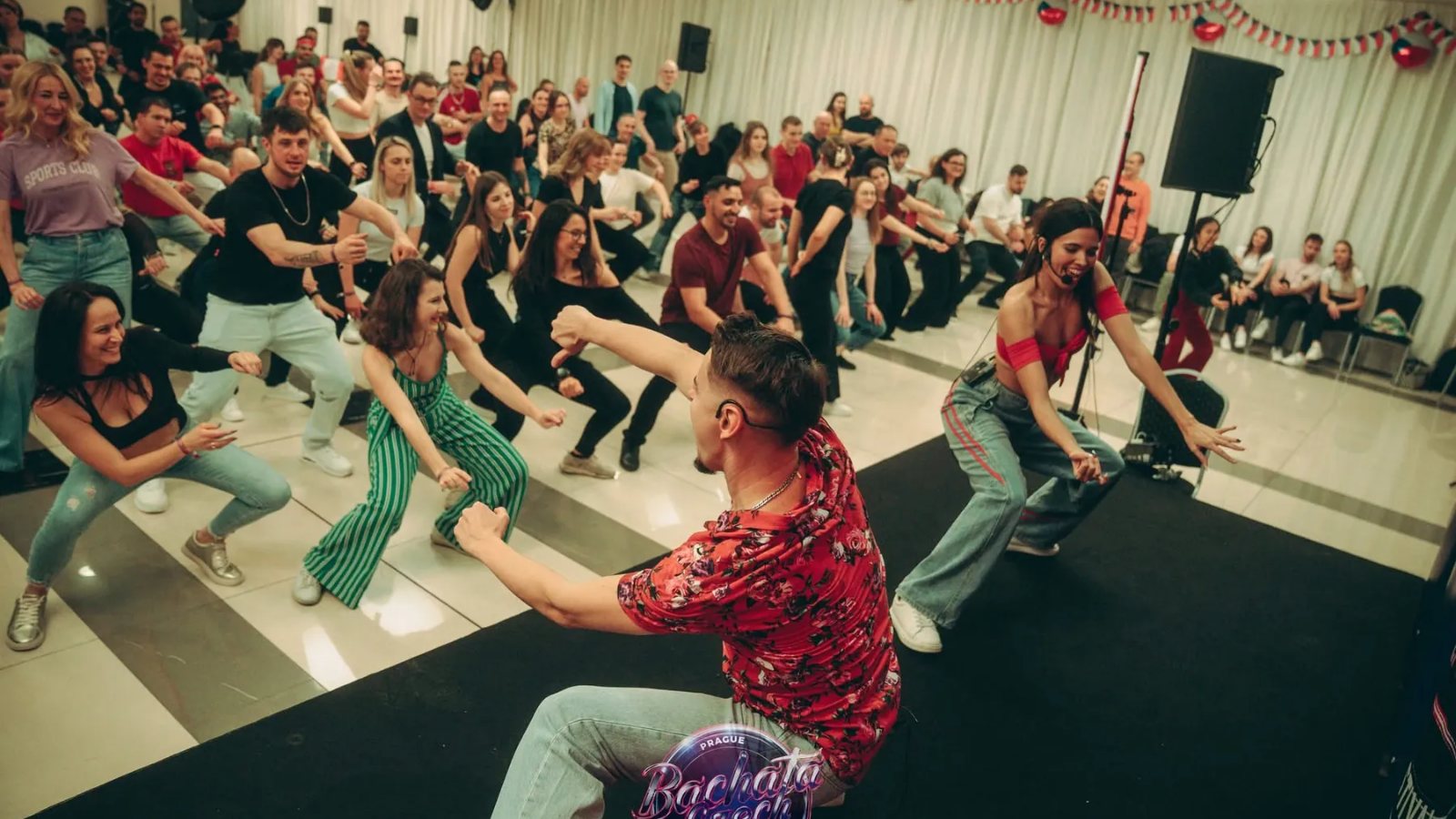
You learn the step in class, but it only settles into your body with music. That is why one of the first questions our students ask after their first lesson is: which bachata songs should I practise to at home? The answer is not simply "the most famous ones". Some hits are too fast for a beginner, others are so heavily produced that the beat gets lost. Below is the selection we recommend to beginners, and, more importantly, how to recognise a good practice song yourself.
What makes a song good for learning
When you listen to bachata as a dancer, you are not following the lyrics or the melody first. You are looking for the beat. A beginner-friendly song makes that easy:
- A clear rhythm. The bongo and the güira are easy to hear and are not buried under vocals or synths.
- A steady tempo. The song does not speed up or slow down and has no long passages without rhythm.
- An audible tap. You can feel a small accent on counts 4 and 8, usually in the bongo or the guitar.
- Readable breaks. When the music stops or changes mood, you can hear it coming.
- A comfortable pace. Slow to medium tempo gives you time to shift your weight and think about your posture.
What you are listening for
Eight counts: three steps and a tap, twice. In a good practice song you hear every count and the accent on 4 and 8.
Three types of bachata music
Bachata is not one sound. The grouping below is our practical one, not an official genre classification. In class and at parties you will hear three types of music, which differ in instruments, tempo and the way people dance to them.
Three types of bachata music
Traditional and Dominican bachata
The sound of the Dominican Republic: the lead requinto guitar plays the melody while the bongo and the metal güira keep the rhythm. Of the three types, this one has the clearest beat, but it is often faster. It is a great school for your ears; for dancing, pick the calmer tracks first.
Romantic and modern bachata
The bachata made famous worldwide by artists such as Aventura, Romeo Santos and Prince Royce. Modern production, strong vocals and mostly medium tempo. The beat is easy to hear and the songs have a regular structure, which makes them the most comfortable place to learn the step.
Sensual and remixes
Slower, smoother music, often pop songs rearranged as bachata. It leaves more room for body movement, so it is played wherever sensual bachata is danced. On the dance floor, faster traditional music is danced more with the feet, slower remixes more with the body.
Traditional vs modern sound
Traditional Dominican
- requinto guitar leads the melody
- bongo and güira are loud and clear
- usually a faster tempo
- danced mainly with footwork and rhythm
Modern and sensual
- vocals and production up front
- softer rhythm, sometimes hidden
- slow to medium tempo
- more room for body movement and connection
17 bachata songs for beginners
This is the academy's beginner-friendly selection for your first months of dancing. All are well-known tracks you will find on every streaming platform and still hear at socials today. Tempo is a rough guide to how the song feels to dance.
| Artist | Song | Tempo | Why it works for practice |
|---|---|---|---|
| Classic and traditional | |||
| Juan Luis Guerra | Bachata Rosa | slow | Calm and gentle, every count has time. Perfect for your first steps to music. |
| Juan Luis Guerra | Burbujas de Amor | slow to medium | Regular rhythm and a clear melody, easy to find the one. |
| Frank Reyes | Tú Eres Ajena | medium | Classic Dominican guitar and a clear bongo. |
| Monchy & Alexandra | Dos Locos | medium | A duet with a regular structure, the phrases are easy to count. |
| Raulín Rodríguez | Medicina de Amor | medium to fast | A prominent güira, the rhythm is there from the first bar. |
| Antony Santos | Voy Pa'llá | fast | Pure traditional energy. Great for ear training; dance to it after a few weeks. |
| Romantic and modern | |||
| Xtreme | Te Extraño | medium | A soft sound and a steady tempo, with room for weight transfer and posture. |
| Aventura | Un Beso | slow to medium | A soft sound and regular phrases, comfortable in closed hold. |
| Aventura | Obsesión | medium | One of the best-known bachatas ever, steady tempo and a readable beat. |
| Prince Royce | Corazón Sin Cara | medium | Clean production with an audible bongo, pleasant to repeat. |
| Romeo Santos | Propuesta Indecente | medium | Played at socials all the time, so it pays to know it. |
| Romeo Santos | Eres Mía | medium | A clear rhythm for practising the basic step. |
| Sensual and remix friendly | |||
| Prince Royce | Stand by Me | slow to medium | You already know the melody, so it is easy to hear where a phrase begins. |
| Grupo Extra | Me Emborracharé | slow | A favourite on sensual floors, calm and smooth. |
| Aventura | Dile al Amor | medium | A regular rhythm and clear phrases, also popular in sensual remixes. |
| Prince Royce, Shakira | Deja Vu | medium | Modern production with a regular rhythm, a good bridge between styles. |
| Romeo Santos | Imitadora | slow to medium | A romantic mood, also played in remixes at sensual nights. |
Use the table to build your own playlist on Spotify or YouTube.
How to practise at home: five minutes a day
Good practice does not have to be long. Pick one song from the table, ideally slow or medium, and stay with it for a whole week. Repetition teaches you more than jumping between ten tracks.
A five-minute routine with one song
- ListenFor the first minute, just listen and find the bongo.
- ClapClap on every count, a little softer on 4 and 8.
- CountCount 1 to 8 out loud and notice where each phrase begins.
- Step in placeAdd the step in place, with the tap and no weight on it.
- DanceSide, forward and back, without counting.
Dance in front of a mirror and watch for small steps and soft knees.
Once you can dance a whole song without a hesitation, swap it for another of the same type. Only then try a different type of music. If you are still unsure about the step itself, our guide to your first bachata class explains how it is taught.
How to find the "one" in a song
The one is the first beat of a dance eight-count, which spans two bars of music. It is where your step locks into the music. Phrase beginnings and changes in the accompaniment, such as a new guitar motif, help you locate it, but vocals may enter before or after it. The tap helps too: when you hear the accent on 4, you know the next count is 5, and four counts later the one comes round again.
- Find the steady pulse first, then check your count against the repeating accompaniment. Vocals may enter before or after the one.
- Listen for where the bongo changes its sound. The accent on 4 and 8 is your guide.
- If you get lost, do not stop. Keep stepping in place and wait for the next phrase.
Hearing the music is a skill in itself, called musicality. We cover it in depth in bachata musicality, and in our classes we work on it from the very first level.
What music you will hear at a party
At a bachata social the DJ usually mixes all three types: traditional Dominican bachata, romantic modern songs and slower sensual remixes. That is why it pays to practise to each of them, so nothing on the floor takes you by surprise. If a track is too fast for you, dance the step in place with smaller steps and stay on the rhythm. Nobody expects figures from a beginner. For tips on where to go and how a social works, read where to dance bachata in Prague, and see upcoming dates on bachata events in Prague.
From beginner songs to faster bachata
Slow songs are a great start, but a dancer who only ever dances to them gets stuck quickly at a party. Move up in small steps:
- First weeks: slow and medium romantic songs, the step in place and to the side.
- After a month: medium tempo and your first traditional tracks, dancing with a partner and simple turns.
- After a semester: faster Dominican bachata, where you learn small, quick steps, and slow remixes, where you learn to slow down and use your body.
- Beyond: breaks, pauses and accents that turn dancing into a conversation with the music.
Speed is not the goal, though. A good dancer can dance a slow song as cleanly as a fast one. How long each stage takes depends mostly on regular practice; we describe a realistic timeline in how long it takes to learn bachata. Dancing with many partners matters too, and so does clear connection, which we explain in leading and following in bachata.
Songs or classes?
Practising at home with music is a great complement, but it cannot replace a teacher who notices that you put weight on the tap or dance off the beat. You progress fastest when you combine both: one class a week and five minutes a day with a song. At Jorge y Mónica Academy in Prague 5 Smíchov, beginners join Bachata 0 directly, taught mainly in English, no partner needed. See bachata classes in Prague.
Questions people ask
What are the best bachata songs for beginners?
How do I know if a song is good for practice?
What types of bachata music are there?
How do I find the one in bachata music?
How long should I practise at home?
What music is played at bachata parties?
Where can I find the recommended songs?

Written by
Jorge and Mónica are professional dancers who have taught bachata for more than fifteen years. As international artists they have taught from Tokyo and Singapore to Melbourne and Spain; in Prague they run Jorge y Mónica Academy and Bachata Czech Republic Festival.