In short
- Dominican bachata is the original style: fast footwork, syncopations, playfulness.
- The sensual style was created in Spain in the early 21st century: body waves, head movement, a closer connection.
- Moderna and fusion add turns and elements from other dances.
- All styles are built on the same basic step. A solid foundation matters more than the style.
Say bachata and everyone pictures something different. Some see fast feet and a smile, others slow body waves and closed eyes. Both are bachata. What differs is the style, not the dance.
The shared foundation
All bachata styles are danced in eight counts: three steps and a tap, twice in a row. Everything else is built on that. If the basics are in your body, you can adapt to a partner whatever style they dance. We explain the basics in our article on bachata basic steps.
Dominican bachata
Dominican bachata is the style danced in the Dominican Republic, where bachata was born.
- Feet: fast and inventive footwork, syncopations and step variations.
- Hold: flexible, open and closed, including a close hold.
- Feeling: joy, playfulness, rhythm. The dance closely follows the bongos and the guitar.
- Music: traditional and modern Dominican bachata.
Bachata sensual
Bachata sensual was created in Spain in the early 21st century and is most often linked to the couple Korke and Judith. It took the bachata basics and added movement from other dances, mainly Brazilian zouk and modern dance: torso and head movement and smooth transitions. From Spain it quickly spread to festivals all over Europe.
- Feet: a simpler step, so the body is free to move.
- Hold: often closer, connection through the frame, the back and the body.
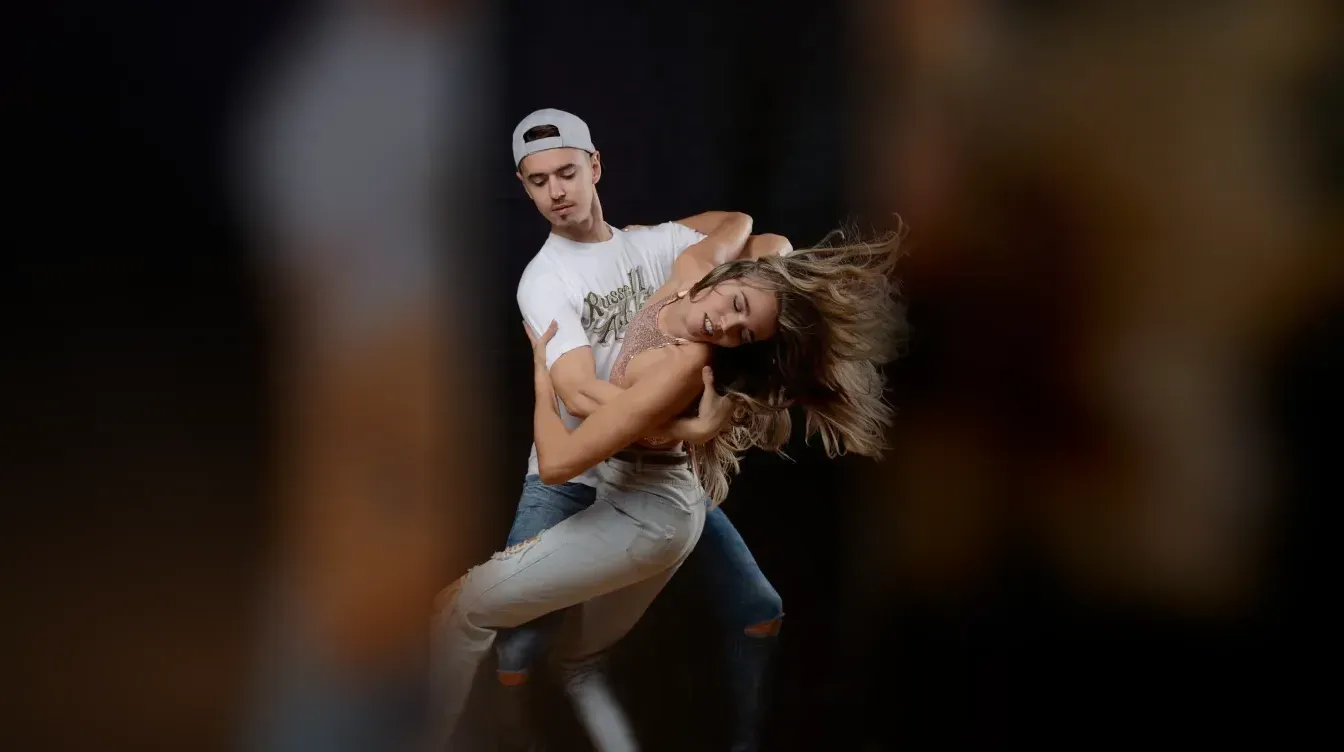
- Feeling: flow, body waves, head movement, dips.
- Music: slower remixes, romantic bachata and pop songs arranged as bachata.
At European festivals this style is now one of the most widely taught, alongside Dominican bachata and fusion.
Body waves
A body wave is a movement that travels through the body step by step, for example from the head through the chest and belly down to the hips, or the other way round. It does not come from one big movement but from a series of small isolations. That is why you first train it solo: chest and pelvis isolations and knee work. Only once the wave works on its own does it move into partnerwork, where the leader leads it with a hand on the partner's back and the follower completes it with the whole body. A smooth wave is the mark of an experienced dancer, a rushed wave looks jerky.
Dips, safely
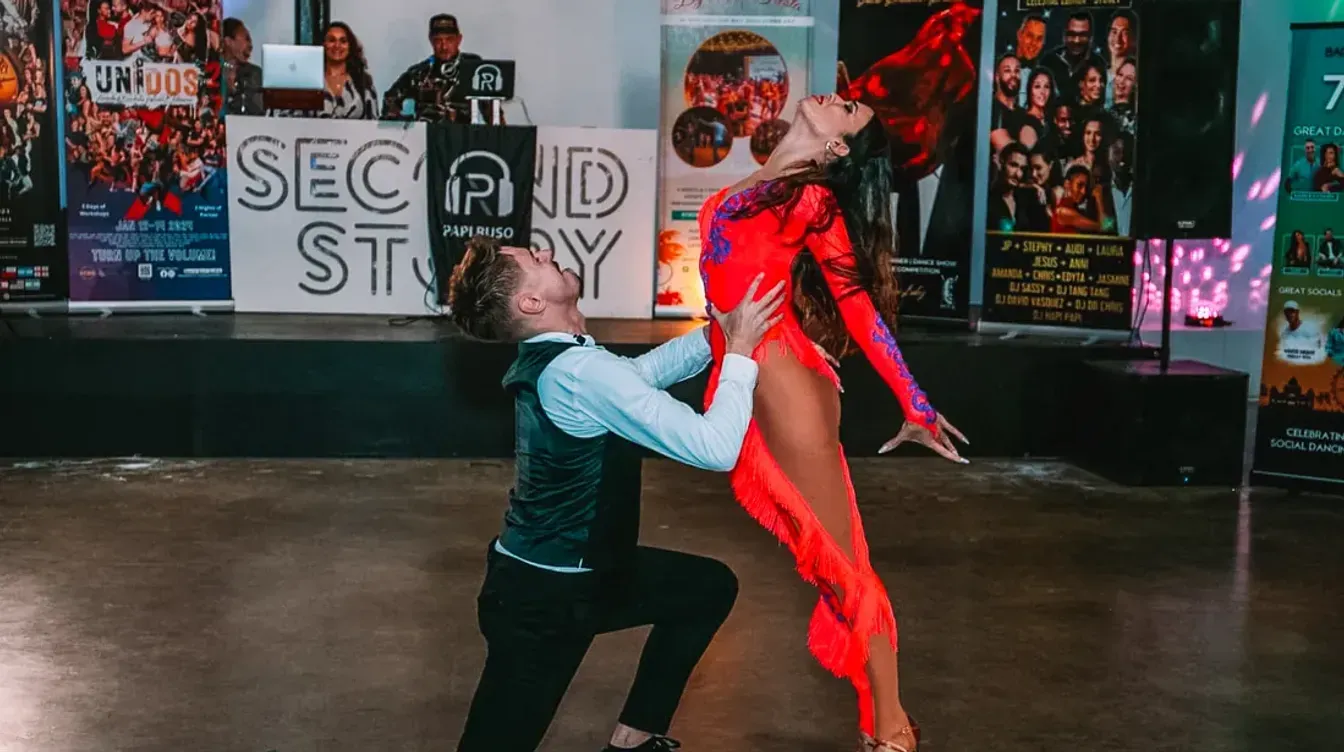
A dip is a backward or sideways lean of the follower that the leader leads and secures. It looks spectacular in photos, but on the dance floor a few simple rules apply:
- Only with consent and at the right moment. A dip belongs on a musical accent, not in every song, and you do not do it with a partner you do not know.
- The follower keeps their own axis. You do not fall into a dip, your back and neck work actively.
- The leader secures, does not pull. Lead with your body, not the strength of your arms, and always bring your partner back into balance.
- Careful with the head and neck. Head movement is learned gradually and under a teacher's supervision.
Bachata moderna and fusion
Moderna appeared when dancers outside the Dominican Republic started adding turns and combinations from salsa to bachata. Fusion goes further and mixes in elements of zouk, kizomba, street styles or contemporary dance.
The differences at a glance
| Dominican | Sensual | Moderna / fusion | |
|---|---|---|---|
| Origin | Dominican Republic | Spain, early 21st century | international |
| Focus | feet, rhythm, play | body, connection, flow | turns, combinations |
| Hold | flexible, often open | often close | mostly open |
| Typical music | traditional and modern Dominican | remixes, romantic, pop | modern bachata |
Which style to start with
At the start a solid foundation matters more than style: a clean step, weight transfer, rhythm and clear leading. We teach bachata so that it works on any dance floor in the world. From the first levels we work with rhythm and music, and in the higher bachata levels we develop body movement, partner connection and musicality, the very skills the more sensual styles are built on. These skills help you adapt to different partners and styles.
In the higher levels Mónica also covers styling in class: arm lines, hip work and the precision in turns that belong to this style.
"It is not about memorised figures, it is about the connection of two people listening to the same music right now." Jorge y Mónica
How to learn the sensual style as a beginner
The best way into this style is through a solid foundation. First learn the basic step, weight transfer and simple leading, for example in a bachata class for beginners. Then add body movement: isolations, waves and a softer connection in closed hold. If you jump straight into figures without the basics, you dance with flair but without confidence, and with a partner you do not know you get lost. At home our online bachata course can help too, where you can train body movement along with the videos.
Where to try the styles
In class you start with the basics and gradually get to body movement. At a festival you then see all the styles at once. At the Bachata Czech Republic Festival in Prague the classes cover Sensual Fusion, Dominican bachata, Bachazouk and more, and the floors are full of dancers of every style.
Questions people ask
What is the difference between bachata sensual and Dominican bachata?
Where does bachata sensual come from?
Which bachata style is better for beginners?
How do I learn body waves?
Are dips in bachata dangerous?
Can you mix sensual and Dominican bachata?

Written by
Jorge and Mónica are professional dancers who have taught bachata for more than fifteen years. As international artists they have taught from Tokyo and Singapore to Melbourne and Spain; in Prague they run Jorge y Mónica Academy and Bachata Czech Republic Festival.