In short
- Bachata comes from the Dominican Republic, kizomba from Angola.
- Bachata has a clear eight-count step with a tap; kizomba is a calm walk in an embrace, with no tap.
- You recognise bachata by the requinto guitar and bongos, kizomba by slow electronic beats.
- Bachata is usually easier to follow at the start, because you can hear the step and the count in the music.
- Leading, frame and musicality carry over from one dance to the other.
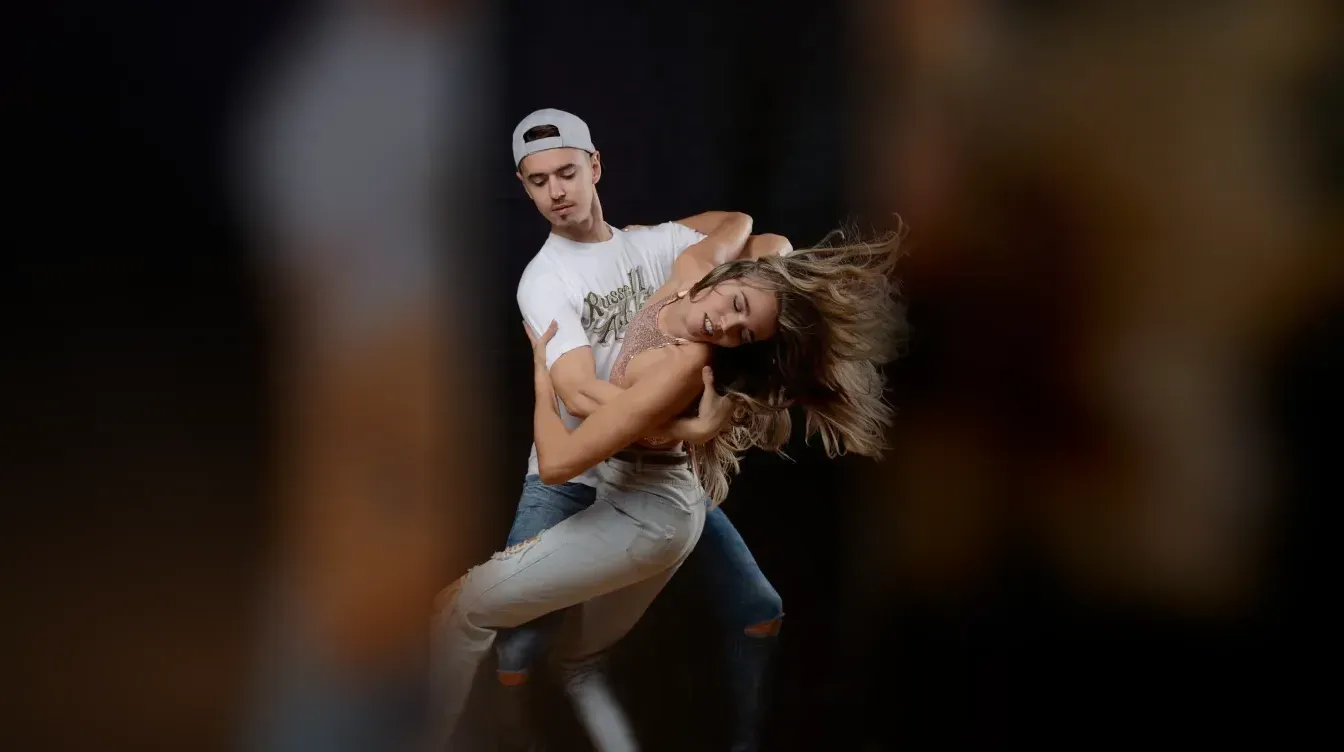
Bachata and kizomba are often mentioned in the same breath. Both are danced in pairs, both in a close hold, and at Latin and African parties they are often played side by side. Still, they have a different origin, different music and a different feel. Here is a comparison to help you choose where to start.
Bachata in a nutshell
Bachata was born in the 20th century in the Dominican Republic as folk music and dance. Its base is eight counts: three steps and a tap on the fourth, then the same to the other side. The music is led by the requinto guitar, bongos and the metal güira, so you can hear the rhythm even as a complete beginner. Depending on the style, the dance is playful with footwork, or smooth with body waves. More in our article what is bachata.
Kizomba in a nutshell
Kizomba comes from Angola. It appeared in the 1980s from the traditional semba dance, influenced by zouk music. It is danced in a close embrace, slowly and smoothly, like walking together while the leader gently shows the direction. It has no marked tap and no quick turns. The music is usually slow, with deep electronic beats, and often sung in Portuguese.
The differences at a glance
| Bachata | Kizomba | |
|---|---|---|
| Origin | Dominican Republic | Angola |
| Music | Guitar, bongos, güira, songs in Spanish | Slow electronic beats, often in Portuguese |
| Basic step | Eight counts, three steps and a tap | Smooth walk with no tap |
| Hold | Open or close, depending on style and figure | Mostly a close embrace |
| Tempo | Medium, from calm to lively songs | Slow and even |
| Turns and figures | Turns, changes of direction, body movement | Few turns, mainly walking, pauses and changes of direction |
Which is easier for beginners
Bachata is usually easier to follow at the start. The step has a clear shape and you hear the tap on the fourth count in the music, so you know where you are. Most beginners dance a full song with a partner after a few weeks of classes. Kizomba looks simple because it is a walk, but that is exactly why everything shows: balance, smooth weight transfer and subtle leading in the embrace. If you do not feel at ease in a close hold straight away, bachata gives you more space, because it can also be danced in an open hold.
Which dance is for you
- Bachata, if you love Latin music, want to play with rhythm, turns and body movement, and want to dance at parties as soon as possible.
- Kizomba, if you like slow music, want to focus on the connection with your partner and do not mind a close embrace from the first minute.
Not sure? Try a first bachata class. The rhythm, leading and hold you learn will be useful in any partner dance you take up next.
Can you dance both?
Yes, and many dancers do. Leading and following, frame, weight transfer and listening to the music carry over from one dance to the other. We do recommend starting with one and giving it at least a semester. When you learn two new dances at once, the steps and rhythms get mixed up and progress is slower. How two dancers talk without words is what we explore in our article on leading and following.
What about salsa?
The third dance often compared with bachata is salsa. It is faster than both bachata and kizomba, has more turns and comes from Cuba and Puerto Rico. You will find the comparison in our article bachata or salsa.
Bachata in Prague
At Jorge y Mónica Academy we teach bachata and Cuban salsa, not kizomba. Beginners join the Bachata 0 class in Prague 5 Smíchov directly, with no partner and no experience, and partners rotate during the lesson. See our bachata classes in Prague or the guide to your first class.
Questions people ask
What is the difference between bachata and kizomba?
Which is easier, bachata or kizomba?
Where does kizomba come from?
Can you dance both bachata and kizomba?
Do you teach kizomba in Prague?


Written by
Jorge and Mónica are professional dancers who have taught bachata for more than fifteen years. As international artists they have taught from Tokyo and Singapore to Melbourne and Spain; in Prague they run Jorge y Mónica Academy and Bachata Czech Republic Festival.