In short
- The basic step: one class.
- Your first full song at a party: usually after four to eight weeks of weekly classes.
- Confident with any partner: around a year, which is why most dancers stay in a level for two semesters.
- What speeds it up: regular classes, partner rotation, social dancing and practice to music at home.
We have taught bachata for more than fifteen years, to hundreds of students in Prague and at festivals around the world. The honest answer is that bachata is one of the easiest partner dances to start and, like every dance, takes time to dance well. Here is a realistic timeline for someone taking one class a week.
Is bachata hard to learn?
To start, yes. The basic step is eight counts: three steps and a tap, then the same to the other side. Most beginners find it more approachable than salsa, so a full song usually comes sooner. What takes longer is everything that makes a dance feel good: clear leading or following, body control, and hearing the music.
How many steps are in bachata?
The basic step has eight counts: step, step, step and a tap on 4, then the same back on 5, 6, 7 and 8. You learn it first as a side step, then forward and back, and in some styles as a box step. From those few patterns come almost all figures: turns, changes of direction and later body movement. The tap is where the typical hip movement comes from. It is not added on purpose; it is the result of the weight shift and soft knees, which is why teachers keep correcting your weight rather than your hips.
Is bachata fast or slow?
Most bachata songs have a moderate tempo, slower than salsa, and many are calm and romantic. That is one reason why people find it easy to dance bachata from the first class. Some modern songs are quick, and Dominican bachata is often danced to faster music with lively footwork. The skill is to listen to the music: the guitar carries the melody, the bongo and the güira the rhythm, and the accents tell you when to turn or pause.
Can you learn bachata alone?
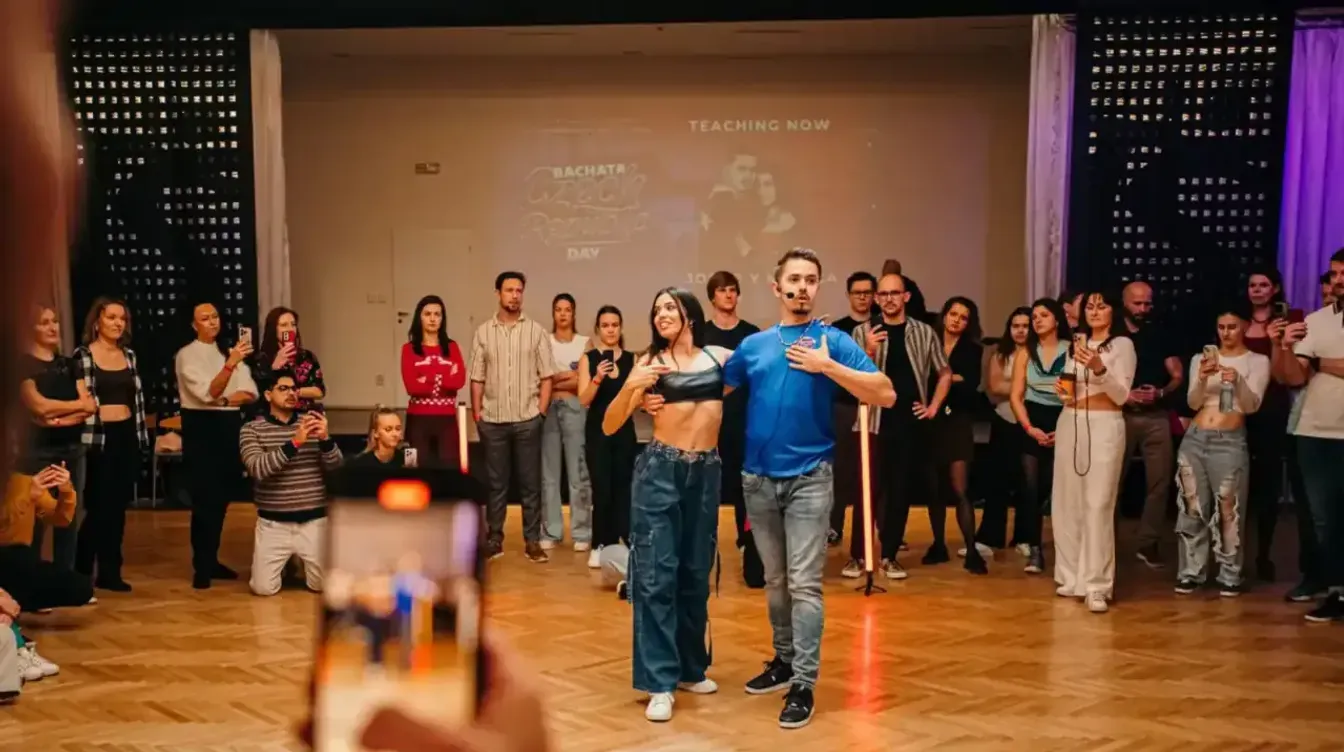
You can practise the basic step, timing and body movement alone at home, and it helps a lot. But bachata is partner dancing: the real skill is leading and following, and you can only learn that with other people. You do not need to bring a partner to dance classes though. Most of our students come on their own. We balance leaders and followers, and partners rotate during the lesson.
Salsa or bachata first?
Both are Latin partner dances, and both are great. Bachata has a simpler basic step and a calmer pace, so most beginners dance a full song sooner. Salsa is faster, with more turns and quicker footwork, and it takes a little longer before you feel relaxed dancing it. Many dancers learn both: leading, following, frame and musicality carry over from one to the other. In Prague you can try them on the same evening: Cuban Salsa 0 starts at 17:00 on Mondays and Bachata 0 at 18:00.
A realistic timeline
| When | What you can do |
|---|---|
| First class | The basic step to the side, forward and back, in rhythm |
| 4 to 8 weeks | A full song with a partner: the basic step, first turns, changes of direction. Your first party. |
| One semester (16 classes) | Comfortable with the basics, a handful of combinations, dancing with different partners |
| One dance year | Confident at socials, starting to play with the music and with body movement |
| Two to three years | At home on most social floors, including at international festivals |
Everyone moves at their own pace. People with a dance background often move faster at the start; people who practise and go out dancing move faster later.
Why our courses run semester by semester
Our courses run by semester: autumn from September and spring from February, with 16 lessons in a standard course. You sign up and pay for each semester separately. Moving up a level usually takes more than one semester, so most dancers stay in a level for two, although everyone progresses at their own pace. If you continue, the next semester picks up exactly where the last one ended, so you never start again from zero or change groups. You grow with the same people, sometimes for years.
What makes you learn faster
- Weekly classes, every week. You find the rhythm by moving, not by watching.
- Partner rotation. Dancing with many people teaches you to lead and follow, not to repeat moves with one person.
- Social dancing. Go to parties early: dancing with new partners teaches you to adapt, which solo practice cannot.
- Music at home. Five minutes of the basic step to bachata songs every day.
- Feedback. A teacher spots a habit (weight on the tap, locked knees) in a minute. Video does not.
- A workshop weekend. A festival or a training camp packs months of input into three days.
What slows you down
- Collecting moves instead of building the basics
- Only ever dancing with one partner
- Long breaks between classes
- Learning alone from videos without anyone checking your step
Does the style matter?
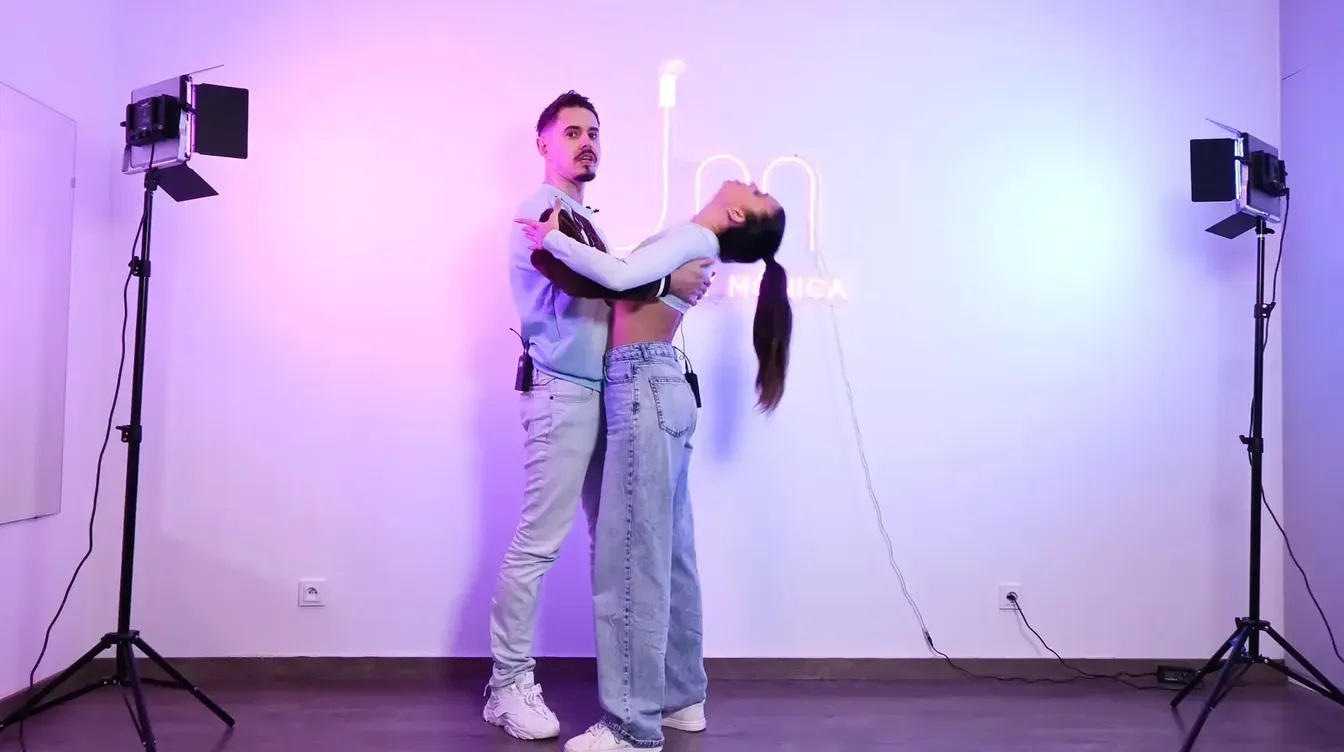
Bachata comes from the Dominican Republic. Dominican bachata is built on quick footwork and playful rhythm, while sensual bachata, developed in Spain, adds body waves and a closer connection. Every style rests on the same basic step, so a good school teaches you the basics and musicality first. Learning to listen to the bachata music, the bongo and the güira, makes every style easier later. If you also want to learn salsa, balance, frame and leading or following carry over, although the rhythms differ.
Build a solid foundation first
The dancers who progress fastest in the long run are not the ones who collect the most figures in the first months. They are the ones who practise the basic step until it is automatic, transfer their weight cleanly, and stay relaxed in the connection with their partner. With that solid foundation, new figures and styles are easy to add, and every workshop builds on it. Without it, each new move feels like starting again. That is why our levels build on each other and why we ask experienced dancers for a short level test before they join a group.
Start in Prague
At Jorge y Mónica Academy in Prague 5 Smíchov, beginners join Bachata 0 directly, taught mainly in English, no partner needed. Five levels take you from your first step to advanced. See bachata classes in Prague and our guide to your first class.
Questions people ask
How long does it take to learn bachata?
Is bachata easy to learn?
Can you learn bachata alone?
How many steps are in the bachata basic?
Should I learn salsa or bachata first?
How can I learn bachata faster?
Can I learn bachata in English in Prague?


Written by
Jorge and Mónica are professional dancers who have taught bachata for more than fifteen years. As international artists they have taught from Tokyo and Singapore to Melbourne and Spain; in Prague they run Jorge y Mónica Academy and Bachata Czech Republic Festival.